
Book vs Movie: The Da Vinci Code (2003, Dan Brown vs 2006, Ron Howard)


Dan Brown’s The Da Vinci Code (2003) became one of the most successful novels of the twenty-first century, selling millions of copies worldwide and sparking widespread debate about religion, history, art, and conspiracy theories. Combining historical speculation with a fast-paced murder mystery, Brown created a thriller that encouraged readers to question accepted historical narratives while following an intricate trail of cryptic clues hidden within some of the world’s most famous works of art and landmarks. Three years later, director Ron Howard adapted the novel into a feature film starring Tom Hanks as Robert Langdon, Audrey Tautou as Sophie Neveu, Ian McKellen as Sir Leigh Teabing, Paul Bettany as Silas, and Jean Reno as Captain Bezu Fache. While the film remains remarkably faithful to the novel’s central narrative, the transition from page to screen required significant changes to pacing, character development, atmosphere, and the presentation of historical information. Consequently, the novel and film each excel in different areas. Brown’s novel offers greater intellectual depth, richer characterisation, and more intricate puzzle-solving, whereas Howard’s adaptation succeeds through its visual storytelling, strong performances, and faithful recreation of many of the novel’s most iconic moments.
One of the greatest strengths of Brown’s novel is its pacing. Rather than relying solely on action, Brown constructs suspense through exceptionally short chapters, many ending on dramatic cliffhangers that compel readers to continue. Every chapter introduces another clue, another coded message, or another historical revelation that gradually expands the mystery surrounding Jacques Saunière’s murder and the legendary Holy Grail. Unlike many conventional thrillers, however, The Da Vinci Code allows readers time to engage intellectually with the mystery. Brown frequently pauses the action to explore the symbolism of Renaissance paintings, the history of secret societies, cryptography, and Christian theology. Readers solve puzzles alongside Robert Langdon and Sophie Neveu, creating an interactive reading experience that rewards careful attention to detail.
Howard’s adaptation necessarily condenses much of this material in order to maintain cinematic pacing. While the film follows the novel’s overall structure remarkably closely, lengthy historical explanations are significantly shortened. This is particularly evident during Langdon’s discussions of Leonardo da Vinci’s The Last Supper. In the novel, Brown spends several pages examining the painting, discussing the arrangement of the apostles, the absence of a traditional Holy Grail cup, and the suggestion that the figure seated beside Christ may be Mary Magdalene rather than the Apostle John. Langdon carefully explains each observation, allowing readers to consider the evidence before drawing conclusions. In the film, these ideas are communicated within a much shorter sequence through narration, close-up shots of the painting, and visual highlighting of specific details. Although the adaptation inevitably sacrifices some of the novel’s intellectual depth, the sequence remains one of the film’s strongest examples of faithfully adapting Brown’s ideas into visual form. Rather than simply telling the audience what Langdon sees, Howard allows viewers to examine the painting alongside him, effectively translating Brown’s written analysis into cinematic language.
The atmosphere of the novel and the film also differs in significant ways. Brown creates tension primarily through intellectual curiosity. Much of the suspense comes not from physical danger but from the excitement of solving increasingly complex puzzles. The Louvre Museum, Westminster Abbey, Temple Church, Château Villette, and Rosslyn Chapel are transformed into enormous puzzle boxes filled with hidden messages waiting to be deciphered. Brown encourages readers to examine every symbol, every historical reference, and every work of art with fresh eyes, creating the sense that history itself is concealing dangerous secrets.
Howard shifts this emphasis towards visual suspense and emotional intensity. The film places greater focus on the pursuit of Langdon and Sophie by both the French police and the mysterious forces attempting to recover the Grail. Hans Zimmer’s orchestral score significantly contributes to the atmosphere, replacing much of the novel’s intellectual tension with a growing sense of urgency and danger. Likewise, cinematographer Salvatore Totino captures the grandeur of the novel’s famous locations, using sweeping shots of the Louvre, Westminster Abbey, and Rosslyn Chapel to create a sense of awe that complements Brown’s descriptions. One particularly successful adaptation occurs during the opening scenes inside the Louvre. Brown describes Jacques Saunière’s final moments in vivid detail as he arranges his body to resemble Leonardo da Vinci’s Vitruvian Man. Howard recreates this scene almost exactly, carefully positioning Saunière’s body within the museum while preserving the novel’s symbolic significance. The visual impact of this sequence arguably exceeds the written version, immediately establishing the film’s central themes of art, symbolism, and hidden meaning.
Characterisation undergoes several subtle but important changes during the adaptation process. In Brown’s novel, Robert Langdon is an energetic academic whose enthusiasm for symbolism and religious history is infectious. Readers have direct access to his thoughts, allowing them to follow his reasoning as he interprets symbols and historical clues. His occasional uncertainty and self-doubt prevent him from becoming unrealistically perfect, while his fascination with puzzles makes him an engaging guide through the novel’s increasingly elaborate mystery.
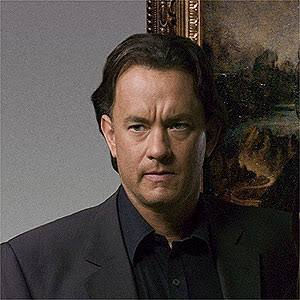
Tom Hanks presents a more restrained interpretation of Langdon. His performance emphasises quiet intelligence and professionalism rather than overt enthusiasm. While this results in a more subdued protagonist than Brown’s original character, Hanks effectively conveys Langdon’s moral integrity and analytical mind. The film inevitably loses some of Langdon’s internal reasoning because cinema cannot easily replicate the extensive internal monologue found in literature. Consequently, many deductions appear to occur more quickly on screen than in the novel. Although some readers criticised Hanks for lacking the energy associated with Brown’s Langdon, his understated performance arguably grounds the increasingly extraordinary events in a believable emotional reality.

Sophie Neveu similarly receives less psychological development in the adaptation. Brown devotes considerable attention to Sophie’s fractured relationship with her grandfather Jacques Saunière, gradually revealing childhood memories that explain her emotional distance from him. Her investigation therefore becomes both an intellectual exercise and a deeply personal search for identity. Audrey Tautou captures Sophie’s intelligence and resilience exceptionally well, but the film necessarily condenses much of her emotional journey. Several conversations exploring her family history are shortened, meaning that the eventual revelation regarding her ancestry carries slightly less emotional weight than it does in the novel. Nevertheless, Tautou’s natural chemistry with Hanks creates a believable partnership that effectively drives the narrative.

One character who arguably benefits from adaptation is Sir Leigh Teabing. Brown presents Teabing as an eccentric historian whose vast knowledge of Grail lore proves indispensable to Langdon and Sophie. Throughout the novel, his enthusiasm for historical conspiracies makes him both charming and slightly obsessive. Ian McKellen elevates the character further through an outstanding performance that perfectly balances wit, intelligence, arrogance, and quiet menace. His portrayal subtly foreshadows Teabing’s true motivations without revealing them prematurely. The gradual revelation that Teabing has manipulated events from behind the scenes is therefore just as effective in the film as it is in the novel, demonstrating one of the adaptation’s most successful translations from page to screen.

Similarly, Paul Bettany’s portrayal of Silas adds considerable emotional depth to the character. In Brown’s novel, Silas is presented as a deeply troubled man whose traumatic childhood and desperate search for acceptance leave him vulnerable to manipulation by those exploiting his religious devotion. Howard condenses much of this backstory but compensates through Bettany’s powerful physical performance. His expressions, posture, and moments of silent prayer communicate profound emotional suffering that words alone cannot fully capture. Scenes depicting Silas’s acts of self-punishment are particularly effective because the visual medium allows audiences to witness his physical pain directly rather than merely reading about it. As a result, viewers often experience greater sympathy for Silas than readers do.
The adaptation of the novel’s puzzles highlights both the strengths and limitations of cinema. Brown invites readers to pause, analyse clues, and solve riddles alongside Langdon and Sophie. The Fibonacci sequence, the cryptexes, hidden anagrams, and symbolic references unfold gradually, encouraging readers to think critically before each revelation. The famous cryptex sequence is especially effective in the novel because Brown carefully explains its ingenious design while allowing readers to speculate about the password hidden within. Howard recreates the cryptex with remarkable visual accuracy, preserving Leonardo da Vinci’s intricate design almost exactly as described in the novel. However, the film necessarily accelerates the puzzle-solving process. Solutions that require several pages of analysis in the novel are often reached within moments on screen. Although this maintains cinematic momentum, it reduces the audience’s opportunity to participate intellectually in solving the mystery. The novel therefore remains superior in fostering reader engagement through its puzzles.

The historical and religious discussions that distinguish Brown’s novel also undergo substantial condensation during adaptation. The novel devotes extensive chapters to explaining the Council of Nicaea, the history of Opus Dei, the Knights Templar, the Priory of Sion, sacred geometry, and the symbolic role of Mary Magdalene throughout Christian history. Whether historically accurate or not, these discussions form the intellectual foundation of the narrative and encourage readers to question conventional interpretations of religious history. Howard wisely recognises that lengthy lectures would disrupt the pace of a feature film. Instead, many of these explanations are communicated through carefully constructed flashbacks, visual montages, and concise dialogue. One particularly effective example occurs when Teabing explains the legend of the Holy Grail. Rather than relying solely on dialogue, the film intercuts his narration with dramatic historical reconstructions, illustrating the persecution of the Knights Templar and the preservation of secret knowledge. Although these sequences simplify Brown’s extensive historical arguments, they successfully communicate the essential ideas while maintaining visual interest.
The film also recreates several of the novel’s most memorable moments with remarkable fidelity. Saunière’s dying message written in invisible ink, the discovery of the hidden key beneath the Louvre, the escape from the museum using the armoured vehicle, the revelation concealed within the cryptex, and the climactic discovery at Rosslyn Chapel all closely mirror Brown’s descriptions. One of the most perfectly adapted scenes occurs during Langdon’s final visit to the Louvre. In both the novel and the film, Langdon kneels before the inverted glass pyramid after realising the likely resting place of Mary Magdalene lies beneath him. Brown describes this moment as one of quiet reverence, emphasising the enduring power of history and forgotten truths. Howard faithfully recreates this scene almost shot for shot, while Hans Zimmer’s emotionally powerful score elevates the sequence into one of the film’s most moving moments. Here, the visual medium arguably enhances Brown’s ending by replacing internal reflection with striking imagery and music that communicate the same emotional resonance.
Not every adaptation choice proves equally successful. Several supporting characters receive reduced roles, particularly Captain Bezu Fache and Bishop Aringarosa. In the novel, Brown explores their motivations in greater detail, revealing the complexities of their beliefs and actions. The film simplifies these characters to maintain narrative focus, making them appear less morally ambiguous than their literary counterparts. Likewise, the relationship between Langdon and Sophie develops more naturally in the novel because readers spend considerably more time with them as they solve puzzles together. The shortened runtime inevitably compresses this progression, making their growing trust feel slightly rushed.
Ultimately, both versions of The Da Vinci Code possess strengths that reflect the unique capabilities of their respective mediums. Brown’s novel excels through its detailed historical discussions, intricate puzzles, rich character development, and intellectual engagement. Readers become active participants in the mystery, carefully interpreting clues while exploring questions concerning history, faith, and symbolism. Howard’s adaptation, meanwhile, succeeds by translating many of the novel’s most iconic moments into visually stunning cinematic sequences. His faithful recreation of the Louvre murder scene, the cryptex, Rosslyn Chapel, and Langdon’s final discovery demonstrates genuine respect for Brown’s source material, while outstanding performances from Ian McKellen, Paul Bettany, and Audrey Tautou strengthen several characters through the power of visual performance.
Rather than viewing the film as a replacement for the novel, it is more accurate to regard it as a complementary interpretation. The novel remains the superior version in terms of intellectual depth, historical complexity, and puzzle-solving, rewarding readers who enjoy carefully unraveling intricate mysteries. The film, however, captures the excitement, visual grandeur, and emotional momentum of Brown’s story with remarkable fidelity, recreating many of its most memorable scenes almost exactly while making necessary adaptations for a cinematic audience. Together, the novel and the film demonstrate how the same story can succeed across different artistic mediums, each offering audiences a unique perspective on one of the most influential mystery thrillers of the modern era.


Comments