
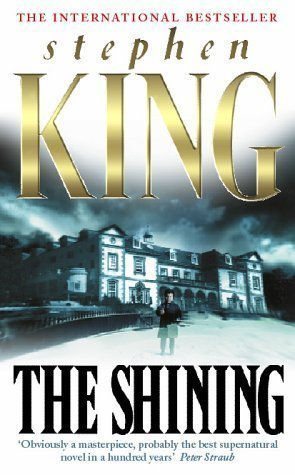
The Shining by Stephen King
- Jodie
- 2 days ago
- 5 min read

Book Review
Title: The Shining by Stephen King
Genre: Psychological, Horror
Rating: 4.5 Stars
Few novels have left as enduring a mark on the horror genre as Stephen King’s The Shining. Since its publication in 1977, it has become a cornerstone of modern horror literature, inspiring countless authors, filmmakers, and readers with its masterful blend of psychological tension and supernatural terror. While Stanley Kubrick’s iconic film adaptation has become a cultural phenomenon in its own right, King’s original novel offers a far richer and more emotionally resonant story. More than a haunted house tale, The Shining is an exploration of addiction, domestic violence, isolation, and the terrifying ways in which personal demons can become as dangerous as supernatural ones. Although it is not without its flaws, the novel remains a gripping and unforgettable read that comfortably earns 4.5 out of 5 stars.
One of the novel’s greatest strengths is its exceptionally well-developed characters. Unlike many horror novels that rely primarily on frightening set pieces, The Shining succeeds because readers become deeply invested in the Torrance family long before the Overlook Hotel begins to reveal its sinister nature. Jack Torrance is one of King’s most complex protagonists, portrayed as a deeply flawed man struggling with alcoholism, anger, and overwhelming guilt over his past mistakes. Rather than presenting him as simply a villain waiting to emerge, King paints Jack as someone genuinely desperate to rebuild his life. His hopes of repairing his marriage, reconnecting with his son Danny, and proving himself as both a writer and father make his gradual psychological deterioration even more tragic. Watching the hotel exploit his insecurities and weaknesses is as heartbreaking as it is horrifying.
Equally compelling are Wendy and Danny Torrance. Wendy is often underestimated in discussions of the novel, but King portrays her as a resilient and compassionate woman trapped between her love for her husband and her instinct to protect her son. While she initially hopes that taking the caretaker’s job at the isolated Overlook Hotel will allow the family to heal, she gradually realises that something far more dangerous than Jack’s temper threatens them. Danny, meanwhile, is one of King’s finest child characters. His psychic ability, known as “the shining,” allows him to perceive the hotel’s violent past and the malevolent forces lurking within its walls. More importantly, Danny is written with remarkable emotional maturity, capturing both the innocence of childhood and the burden of possessing abilities he cannot fully understand.
The Overlook Hotel itself is arguably the novel’s greatest achievement. Rather than functioning merely as a setting, it becomes a living, malevolent presence whose history permeates every corridor, room, and hallway. King painstakingly builds the hotel’s mythology through newspaper clippings, old records, ghostly apparitions, and conversations with former employees, creating the impression that the building has absorbed decades of violence, corruption, and suffering. Every new revelation deepens the reader’s understanding that the hotel is not simply haunted; it is actively predatory. This gradual world-building transforms the Overlook into one of the most memorable locations in horror fiction.
King’s pacing deserves particular praise. Unlike many contemporary horror novels that rush towards their supernatural elements, The Shining embraces a slow-burning narrative that steadily increases the tension. The early chapters focus heavily on character development, family dynamics, and Jack’s personal struggles, allowing readers to understand what is at stake before the horror fully unfolds. As the winter weather isolates the family and the Overlook begins tightening its psychological grip, the atmosphere becomes increasingly oppressive. The growing sense of claustrophobia is expertly handled, making the vast hotel feel simultaneously enormous and suffocating. By the novel’s final act, the tension has become almost unbearable, resulting in a climax that is both emotionally devastating and genuinely frightening.
One of the novel’s most fascinating aspects is its exploration of addiction. Jack’s alcoholism is not merely a character flaw but one of the story’s central themes. King, drawing from his own experiences with substance abuse, presents addiction as something that distorts judgement, damages relationships, and creates vulnerabilities that can be exploited. The Overlook does not simply possess Jack; it manipulates the anger, resentment, and cravings that already exist within him. This psychological dimension elevates the novel beyond conventional supernatural horror, suggesting that the greatest monsters are often those already residing within us.
The supernatural elements are equally effective because they remain grounded in emotional truth. Memorable scenes involving the ghostly woman in Room 217, the hedge animals that appear to move when no one is looking, the mysterious masquerade guests, and the chilling appearances of previous hotel residents all contribute to an atmosphere of relentless unease. King rarely relies on sudden shocks. Instead, he builds dread through anticipation, allowing readers’ imaginations to amplify the terror. Even seemingly ordinary corridors become unsettling because of the constant expectation that something impossible may appear around the next corner.
The novel also benefits from King’s remarkable ability to weave symbolism throughout the narrative. The boiler, which Jack must regularly monitor to prevent catastrophic failure, functions as an obvious metaphor for his own deteriorating mental state. As pressure steadily builds within both the boiler and Jack himself, readers recognise that disaster is becoming increasingly inevitable. Likewise, the snowstorm surrounding the hotel reflects the family’s growing isolation, cutting them off not only from civilisation but also from any realistic possibility of escape. These symbolic elements add considerable literary depth without ever disrupting the momentum of the story.
Where the novel occasionally falters is in its length. Some sections, particularly those detailing the extensive history of the Overlook Hotel or Jack’s internal reflections, feel repetitive and could have been condensed without sacrificing the emotional impact. King’s tendency to linger on certain ideas sometimes slows the pacing during the middle portion of the novel. Readers looking for constant action may find these chapters less engaging, although they ultimately contribute to the richness of the hotel’s mythology and Jack’s psychological descent.
Similarly, while the ending is emotionally satisfying and thematically consistent, it differs significantly from Kubrick’s famous film adaptation. Readers familiar only with the film may be surprised by the novel’s greater emphasis on redemption, sacrifice, and the lingering humanity that remains within Jack despite his possession. In many ways, the novel presents a more compassionate and tragic conclusion, reinforcing King’s belief that people are rarely defined solely by their worst moments.
Comparisons between the novel and Kubrick’s adaptation are inevitable, and while the film is undoubtedly a cinematic masterpiece, King’s novel offers a deeper emotional experience. The film prioritises visual symbolism, ambiguity, and psychological horror, whereas the book devotes far greater attention to character relationships and the emotional consequences of addiction and abuse. Jack Torrance, in particular, is considerably more sympathetic in the novel than in the film, making his downfall infinitely more heartbreaking. Conversely, Kubrick’s adaptation arguably surpasses the novel in terms of visual atmosphere and iconic imagery, but it sacrifices much of the emotional complexity that makes King’s original story so powerful.
Ultimately, The Shining remains one of Stephen King’s finest achievements and one of the defining horror novels of the twentieth century. Its blend of supernatural terror, psychological depth, and family drama creates an experience that is as emotionally affecting as it is frightening. King demonstrates a remarkable understanding of fear, not simply fear of ghosts or haunted buildings, but fear of losing control, repeating past mistakes, and harming the people we love most. The Overlook Hotel may provide the setting for the horror, but it is the humanity of the Torrance family that gives the novel its lasting impact.
Powerfully written, richly atmospheric, and emotionally devastating, The Shining is a horror classic that rewards both first-time readers and those returning to its haunted corridors. While its deliberate pacing and occasional repetition prevent it from achieving absolute perfection, these are minor shortcomings in an otherwise extraordinary novel. Stephen King delivers a story that is terrifying not only because of the ghosts lurking within the Overlook Hotel, but because it confronts the darkness that exists within ordinary people. It is a masterclass in psychological horror and an essential read for anyone interested in the genre, earning a thoroughly deserved 4.5 out of 5 stars.
Buy it here:
Paperback/Hardcover: amazon.co.uk amazon.com
Kindle Edition: amazon.co.uk amazon.com



Comments